The Bowie knife is more than a tool. It’s a piece of American legend, forged in frontier danger and carried into folklore. Bowie knife lore tells the story of a blade that became a symbol of grit, survival, and rugged independence. From the man who gave it his name to the marks that age a blade over decades of use, every Bowie knife carries a tale worth telling.
Below, we dig into where the legend started, how it spread across the American frontier, and why the condition of a blade, whether battle scarred or nearly untouched, adds so much to its character.
Who Was Jim Bowie? The Man Behind the Legend
You can’t talk about bowie knife lore without starting with Jim Bowie himself. Born in Kentucky around 1796, Bowie grew up on the rough edges of the American South. He was a frontiersman, a land speculator, and later a soldier who died defending the Alamo in 1836.
But the knife that carries his name didn’t stay tied to one man. It grew into something larger than life.
The story most people know is the Sandbar Fight of 1827. During a duel near Natchez, Mississippi, a brawl broke out. Jim Bowie, wounded and outnumbered, pulled a large knife and fought his way out. Word of that fight spread fast. Suddenly, everyone wanted a knife like the one Bowie carried.
Whether every detail is true matters less than what happened next. The knife became a symbol.
The Origins of the Bowie Knife Design
The exact origin of the first Bowie knife is still debated. Some historians credit Jim’s brother, Rezin Bowie, with the original design. Others point to blacksmith James Black, who is said to have crafted a refined version around 1830.
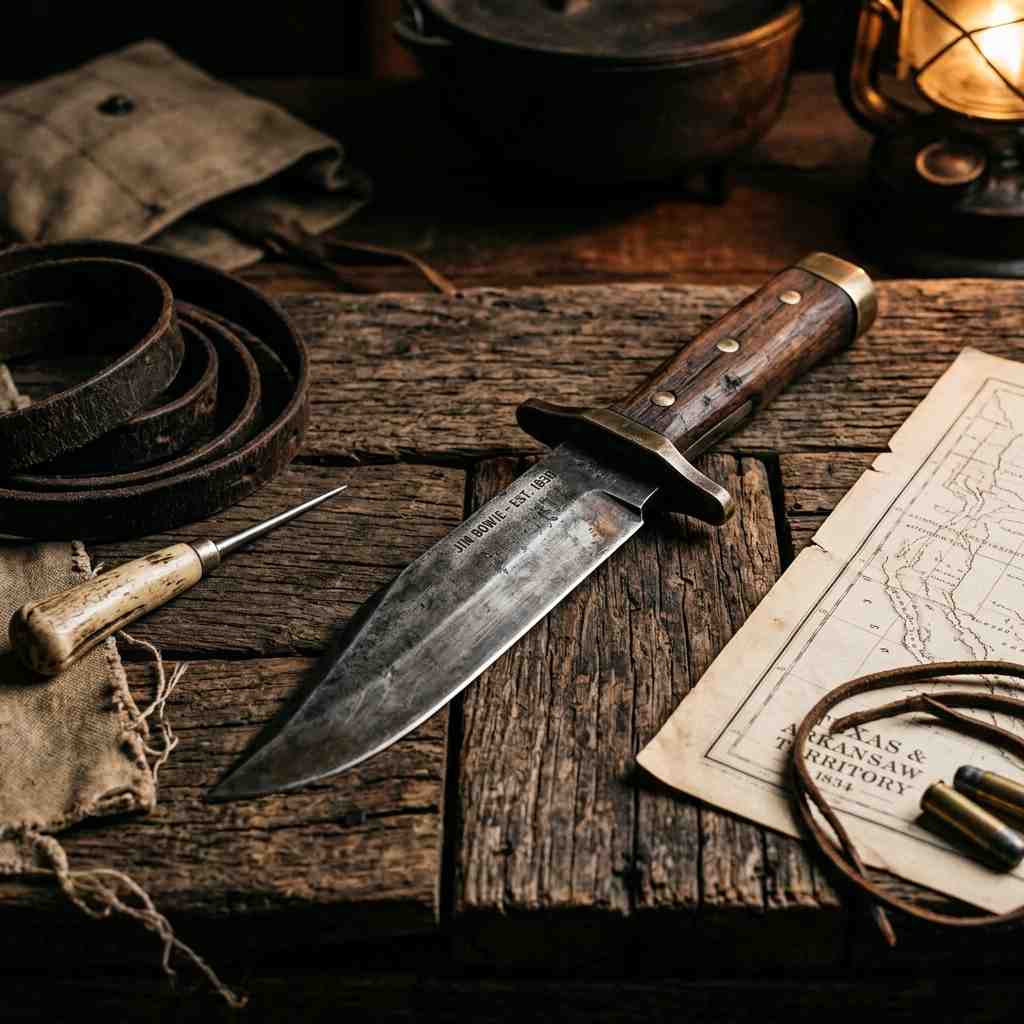
Here’s what makes a classic Bowie knife recognizable:
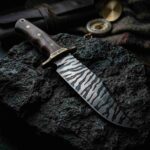
- A long blade, often between 6 and 12 inches
- A distinctive clip point that tapers to a sharp tip
- A crossguard to protect the hand
- A sturdy handle built for a firm grip
The design was practical. It worked for hunting, skinning, chopping, and self-defense. That versatility is a big reason the knife spread so quickly across the frontier.
If you want to see how these traditional design elements still hold up today, browse a modern Bowie knife collection to compare shapes, blade lengths, and finishes.
How the Bowie Knife Shaped Frontier Culture
The American frontier was a hard place. Settlers, hunters, and travelers needed gear that could handle almost anything. The Bowie knife filled that role better than most tools of its time.
By the 1830s and 1840s, the knife had become a fixture of frontier life. Blacksmiths and cutlers across the country, and even in England, produced their own versions to meet demand. Some blades were plain and functional. Others were elaborate, with engraved handles and polished steel.
The knife also carried a certain reputation. Carrying a Bowie signaled that you were ready for trouble and prepared to handle yourself. That image stuck, and it’s part of why the knife still captures the imagination today.
Bowie Knife Lore Battle Scarred: When a Blade Tells Its Story
A knife that has seen real use looks different from one fresh off the bench. This is where the idea of a bowie knife lore battle scarred finish comes in.
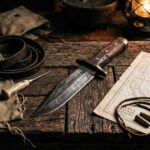
A battle scarred blade carries visible signs of its history:
- Nicks and scratches along the edge
- Patina or darkening on the steel
- Worn spots on the handle where a hand gripped it for years
- Small dents that hint at hard work or hard use
For many collectors, these marks aren’t flaws. They’re proof of a story. A battle scarred Bowie knife feels alive with history. It suggests a blade that was carried, trusted, and put to real work rather than left in a drawer.
That character is hard to fake. Genuine wear develops slowly, through actual use and time. When you hold a knife with an honest battle scarred finish, you’re holding a record of everything it has done.
Bowie Knife Lore Minimal Wear: The Beauty of a Preserved Blade
On the other end of the spectrum sits the bowie knife lore minimal wear finish. This describes a blade that has been carefully preserved, showing little to no signs of use.
A minimal wear Bowie knife highlights:
- Clean, bright steel with the original polish intact
- Sharp, unblemished edges
- A handle that looks close to how it left the maker’s hands
- Crisp detail on any engraving or filework
Some collectors prefer this look because it shows the knife in its purest form. You see the craftsmanship exactly as the maker intended, without decades of wear layered on top.
Both styles have their appeal. A battle scarred knife tells you where it has been. A minimal wear knife shows you what it can be. Neither is better. They simply speak to different tastes and different reasons for collecting.
Custom and Handcrafted Bowie Knives: Keeping the Tradition Alive
The legend of the Bowie knife lives on through modern makers who still craft these blades by hand. Custom work lets you shape a knife to your own vision, from blade profile to handle material to finish.
A skilled bladesmith can build a knife with a fresh, minimal wear look or intentionally give it an aged, worn character. Handcrafted blades often carry a level of detail that mass production can’t match, with careful attention to balance, grind, and fit.
If you’re drawn to that kind of craftsmanship, explore a handcrafted Bowie knife made with traditional freehand techniques. This approach honors the same care that went into the earliest Bowie blades nearly two centuries ago.
Why Bowie Knife Lore Still Matters Today
The Bowie knife has appeared in countless movies, books, and stories over the years. It shows up in Westerns, survival tales, and adventure films. Each appearance adds another layer to the myth.
But the appeal goes deeper than pop culture. The knife represents self-reliance and a connection to a rougher, simpler time. Holding one links you to generations of hunters, soldiers, and frontier folk who trusted the same design.
That’s the heart of bowie knife lore. It’s a blend of real history and enduring legend that keeps drawing new fans year after year.
Frequently Asked Questions
What makes a knife a true Bowie knife?
A true Bowie knife features a large blade, usually 6 to 12 inches long, with a clip point tip, a crossguard, and a sturdy handle. The design traces back to the knives associated with Jim Bowie in the early 1800s. While styles vary, these core traits define the classic form.
Is bowie knife lore based on real events?
Yes, at least in part. The legend grew out of real events, especially the Sandbar Fight of 1827, where Jim Bowie used a large knife to survive a violent brawl. Over time, the true story mixed with exaggeration and folklore, creating the rich lore we know today.
What does a battle scarred Bowie knife mean?
A bowie knife lore battle scarred finish refers to a blade that shows real signs of use and age. This includes nicks, patina, and worn spots on the handle. For collectors, these marks add character and suggest the knife has a genuine history behind it.
Why do some collectors prefer minimal wear Bowie knives?
A bowie knife lore minimal wear finish shows the blade in near-original condition, with bright steel and crisp detail. Collectors who value craftsmanship often prefer this look because it displays the maker’s work without decades of wear covering it.
Who really invented the Bowie knife?
The exact inventor is debated. Some credit Jim Bowie’s brother, Rezin Bowie, with the original design. Others point to blacksmith James Black, who is said to have refined the design around 1830. Both likely played a role in shaping the knife we recognize today.
Are Bowie knives still made by hand?
Yes. Many modern bladesmiths still craft Bowie knives by hand using traditional techniques. Handcrafted blades offer detail, balance, and character that factory production often lacks, keeping the original spirit of the design alive.
Conclusion
Bowie knife lore is one of the great threads in American history. It weaves together a real frontiersman, a famous fight, and a blade that became a symbol of toughness and independence. From its debated origins to its role on the frontier, the Bowie knife earned its legend through both use and story.
The finish of a blade adds even more to that tale. A battle scarred knife carries the marks of a life lived hard, while a minimal wear knife preserves the maker’s craft in its purest form. Both tell a story, just in different ways.
Whether you collect for history, craftsmanship, or the simple thrill of holding a piece of legend, the Bowie knife has something to offer. Explore the tradition, appreciate the detail, and find the blade that speaks to you.